

Cash Game vs Tournament: Home Poker
By All In Central ·

If you want the short answer: run a tournament. For most home games, especially ones with mixed experience levels or a fixed bedtime somewhere in the room, a tournament gives you a shared story, a definite winner and a capped maximum loss. Everyone pays the same buy-in, everyone knows the worst case before a card is dealt, and the night ends at a roughly predictable hour.
A cash game is the better fit for a small circle of regulars who play often. People can arrive late, leave early, rebuy when they bust and cash out when the babysitter texts. The trade-off is that the money is real in a much more immediate way, the evening has no natural ending, and it is genuinely harder to keep casual.
I have hosted both formats for years, and my honest conclusion is that the format matters more than the stakes, the snacks or the playlist. Pick the wrong one for your group and the night sags; pick the right one and even a table full of first-timers has a proper evening. Here is the comparison I wish someone had given me before my first attempt.
What a tournament gives you
A tournament is one story with a beginning, a middle and an end. Everyone starts with the same stack, the blinds rise on a schedule, short stacks get squeezed, someone nurses three big blinds all the way to the bubble, and eventually one person has all the chips. Even the players who bust early were part of the same plot.
Three practical things fall out of that:
- A set end time. With 20-minute levels a standard structure finishes in four to five hours; a turbo with 15-minute levels wraps up in two to three. You can honestly tell people the game will be done by eleven.
- Fixed losses. The buy-in is the whole cost of the evening. Nobody goes home lighter than they planned.
- A winner. There is a champion, possibly a trophy, and something to argue about until next time.
The catch is that a tournament needs a bit of structure to work: starting stacks around 100 big blinds, blinds that rise at roughly 1.3 to 1.5 times per level, and a break every five levels or so before bladders and attention spans give out. The blind structure tool will build a schedule for you, and the home tournament guide walks through the rest.
The other catch is getting knocked out. Bust in level three and you are on drinks duty for the rest of the night. More on the fix for that below.
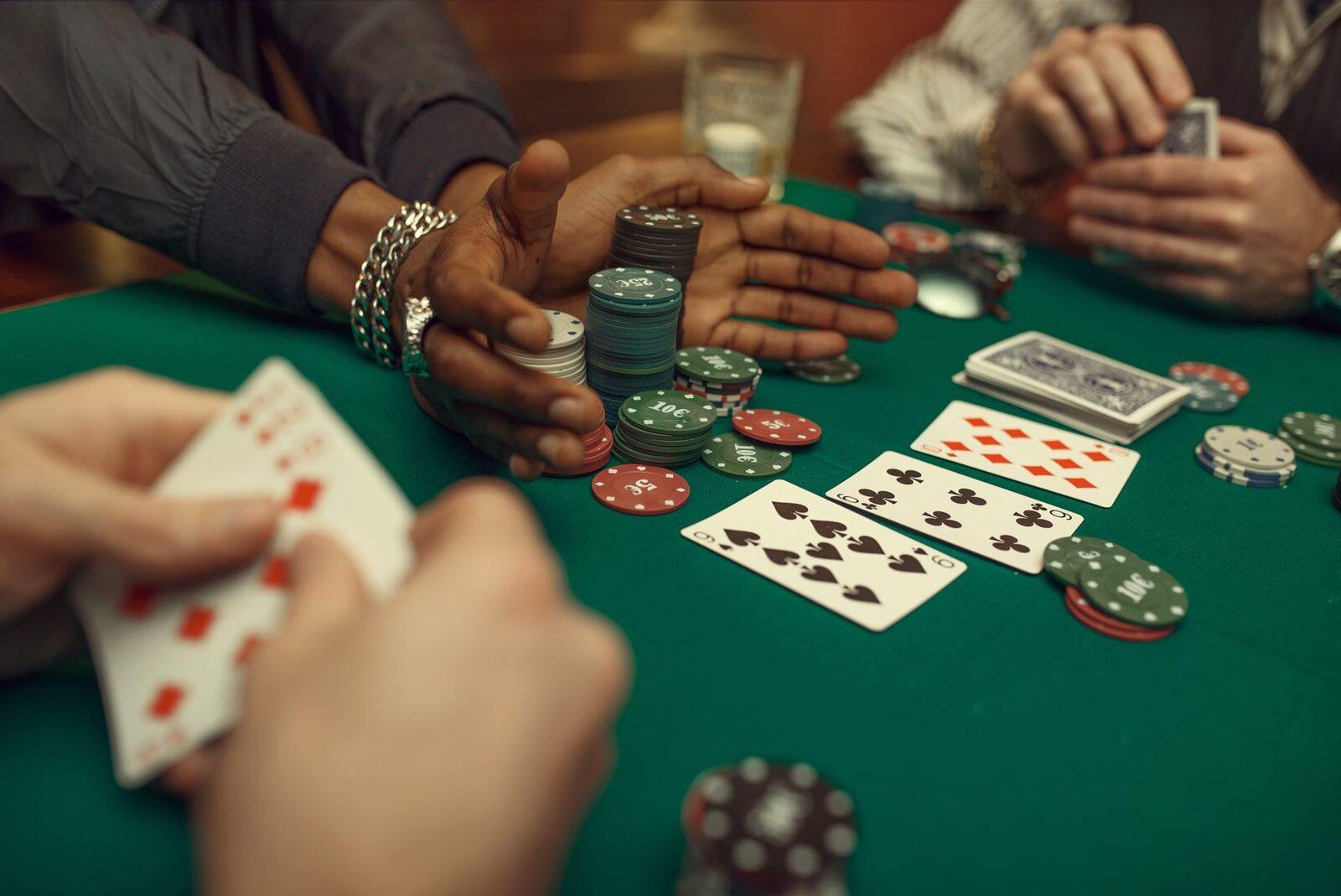
What a cash game gives you
A cash game is not a story; it is a session. Chips are money, blinds never rise, and the game exists whenever two or more people fancy playing. That makes it wonderfully flexible.
- Arrive at nine, leave at eleven, nobody minds.
- Bust a stack? Rebuy and carry on. Nobody is ever out.
- No schedule, no clock, no admin beyond a fair bank.
For a group of regulars who play every week or two, this is hard to beat. The game moulds itself around real life instead of the other way round.
The downsides mirror the strengths. There is no arc and no winner, just people up and people down. Losses are open-ended: a modest buy-in can quietly triple by midnight through perfectly reasonable-seeming rebuys. And there is no natural end, so somebody eventually has to be the villain who calls time while another player is stuck and lobbying for one more orbit. If you have never watched a grown adult negotiate for one more orbit, you have not hosted a cash game.
The stakes psychology
This is the part I think matters most for home games, and it is mostly about how losing feels rather than how much is lost.
A tournament buy-in caps the damage in advance. If the buy-in is fifteen pounds, then fifteen pounds is the price of the evening, agreed before anyone was emotionally involved, same as a takeaway. Once the chips are in play they stop being money; they are score. People bluff more, laugh more and take the whole thing less personally. Beginners in particular relax enormously when they know the worst case is already paid for.
Cash chips never stop being money. Every pot is denominated in actual pounds, which makes cautious players clam up and stung players chase. Chasing is the real hazard: in a tournament you cannot rebuy your way out of a bad night, and that limit protects people from themselves. In a cash game the only limit is the one the loser sets while annoyed, which is to say not much of a limit at all.
None of this makes cash games bad. It makes them a format for people who have already decided they are comfortable with it, which usually means regulars, and usually means stakes small enough that a bad night is a shrug.

Which format fits your group
Run a tournament if
- The group is mixed: seasoned players, beginners, partners who came for the company.
- People need a real end time, whether for work, kids or last trains.
- You play occasionally rather than weekly and want the night to feel like an event.
- You would rather the winner earned bragging rights than a meaningful sum.
Run a cash game if
- It is the same trusted faces every time and everyone knows the score.
- Arrivals and departures are staggered and unpredictable.
- Nobody wants to sit out after busting, ever.
- The group is honest about money and relaxed when it moves around.
If you are unsure, run the tournament. A regular crew will happily play a tournament; a mixed group dropped into a cash game tends to go quiet.
The hybrid evening: best of both
Here is the arrangement that fixed my own game: tournament first, cash game after.
Run the tournament as the main event. When the bubble bursts, or simply once two or three players have gone out, the eliminated players start a small cash table off to the side with pocket-change stakes. By the time the tournament crowns its winner, the cash game is warmed up and anyone who fancies a last hour can join.
The eliminated players stop being spectators, the tournament keeps its shape, and the people who wanted a longer session get one. Two small tips: use visibly different chips for the cash table, or write the values down where everyone can see them, and set the cash stakes lower than feels necessary. The cash game is the encore, not the show.
The kit is mostly the same
Whichever way you go, the chip maths barely changes. Budget roughly 50 to 80 chips per player, and in a tournament make the smallest chip equal to the small blind so you are not making change all night. The chip distribution calculator sorts the denominations for either format.
The house rules question is identical too. Agree the awkward stuff before the first hand: string bets, showing folded cards, what happens when someone nips to the loo mid-orbit. Then put a hand ranking chart on the wall. The rules page and the printable hand rankings serve both formats equally; a flush beats a straight regardless of how you are keeping score.
Where the timer comes in
I will be straight about this: the free poker timer is a tournament tool. Cash games do not need a clock, because nothing rises and nothing is timed. That is rather the point of them.
But if you land on tournaments, or on the hybrid evening, the timer handles the fiddly parts: blind levels with antes and breaks, automatic prize-pool payouts, a live count of players left and the average stack, and a fullscreen mode that sits on the TV and keeps the screen awake. You can paste the whole guest list in at once, draw seats randomly, and save the setup for next month. It runs in the browser with no sign-up, so it costs exactly what a cash game bank costs: nothing.
Pick the format that fits the people, not the poker. Then let the clock do the nagging about blinds while you concentrate on the important business of losing with a weak ace.
Related reading
 Home Poker Formats: Freezeout, Rebuy, Bounty1 August 2026
 How to Split the Prize Pool: Home Poker Payout Structures1 October 2026
 How to Keep Your Poker Night on Schedule9 July 2026